Development
Boards for prototyping and embedded systems.
Russian hardware for engineers, education, and open source. Docs and schematics on GitHub.
From engineers,
to engineers
We build what we use ourselves — for engineers, developers, and anyone learning to be one. Open source and docs on GitHub.
Boards for prototyping and embedded systems.
Boards for learning: courses, labs, clubs.
Schematics and code in the open.
Our boards are designed for your convenience. Here you'll find code examples on GitHub, documentation — schematics, drawings, pinouts, and 3D models — and links to buy on marketplaces.
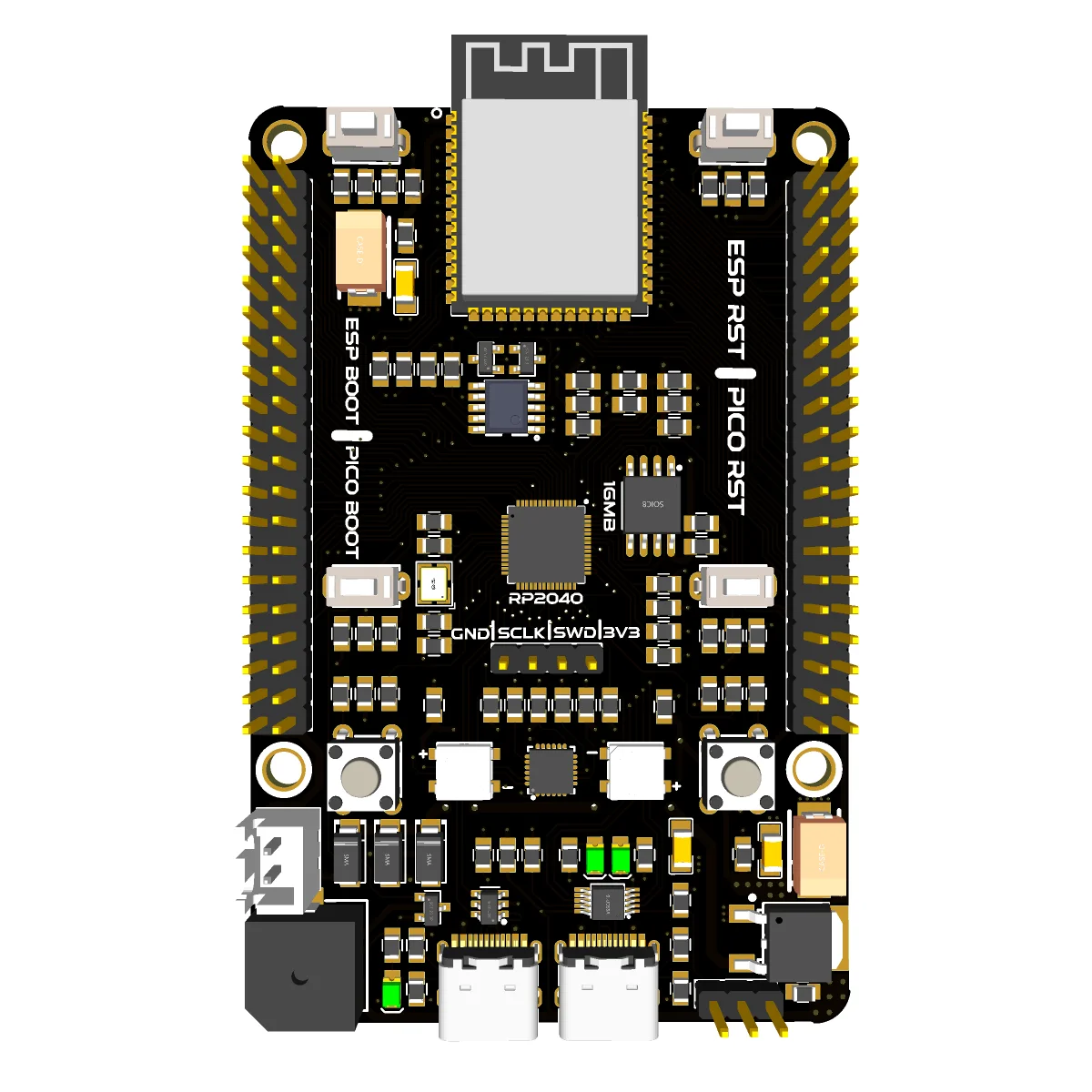
RP2040 + ESP32-S3. Two powerful controllers. One for WiFi and BLE. The other for fast peripheral processing.
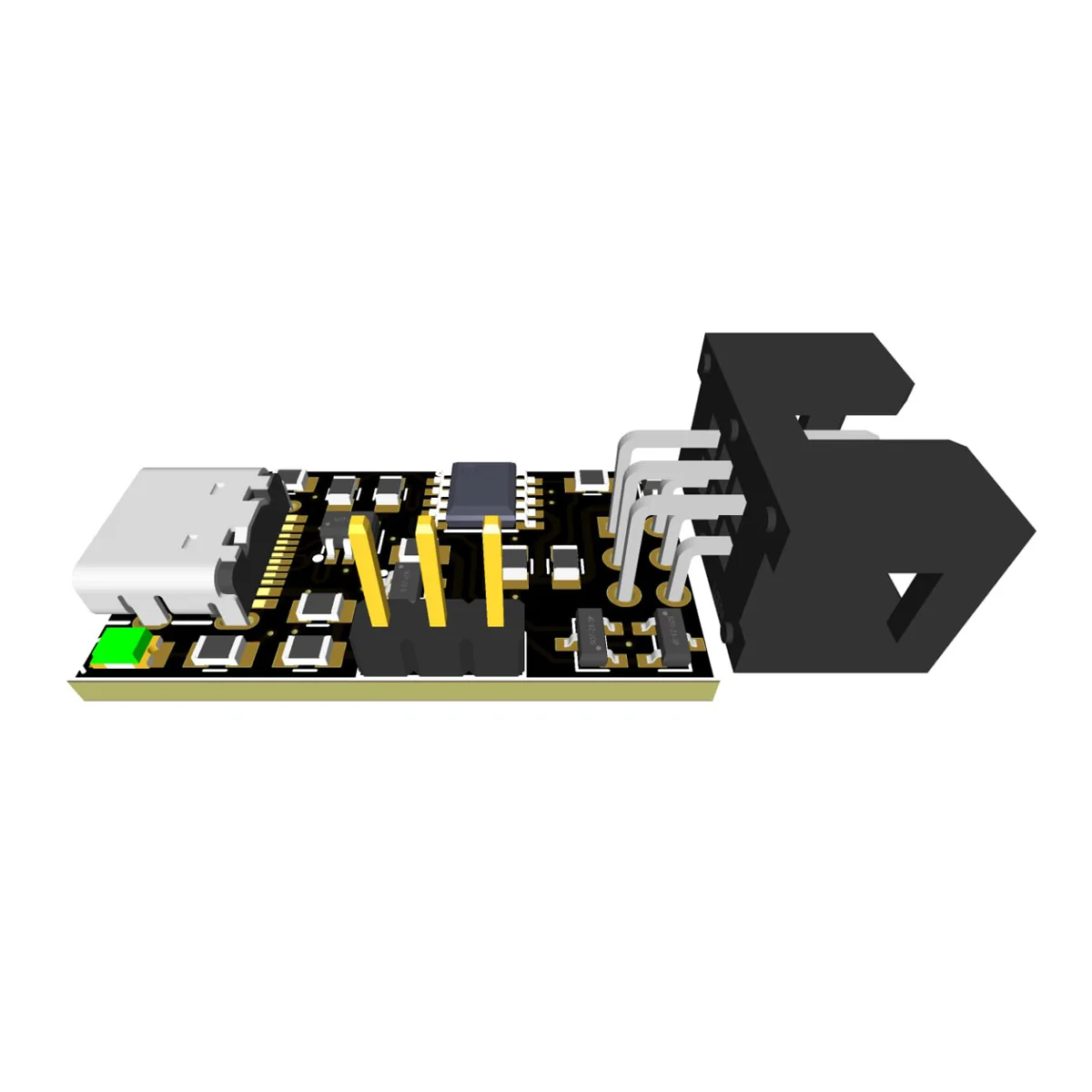
Compact programmer. A handy USB → UART TTL converter. Type-C connector. Based on CH340K.
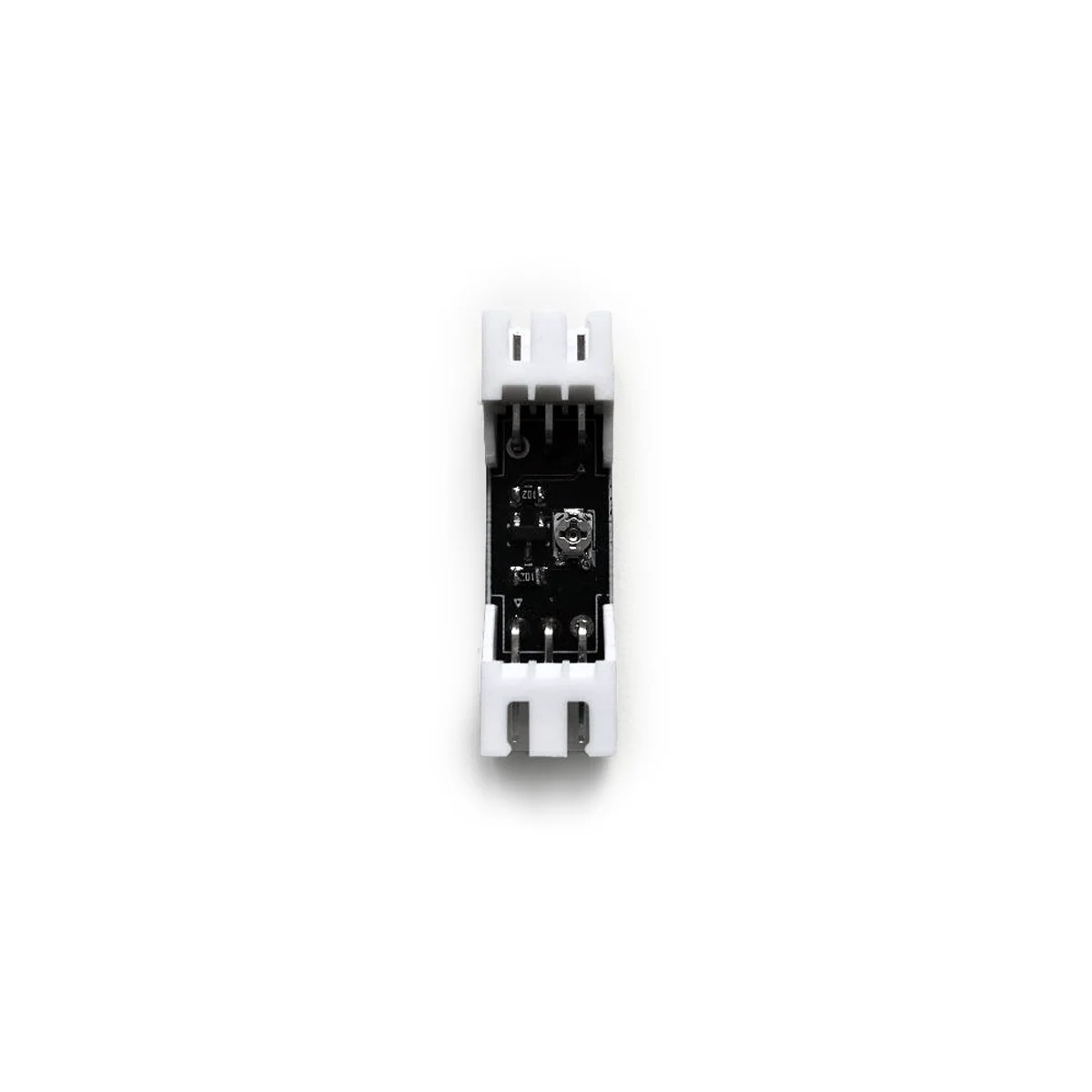
Converts a high logic level to a low one. For example: 3.3 → 5 V. 1 or 2 lines. Through-hole mounting. Convenient for connecting sensors and logic.
UBoard boards and modules.
Got questions? Reach out! Get in touch with the team:
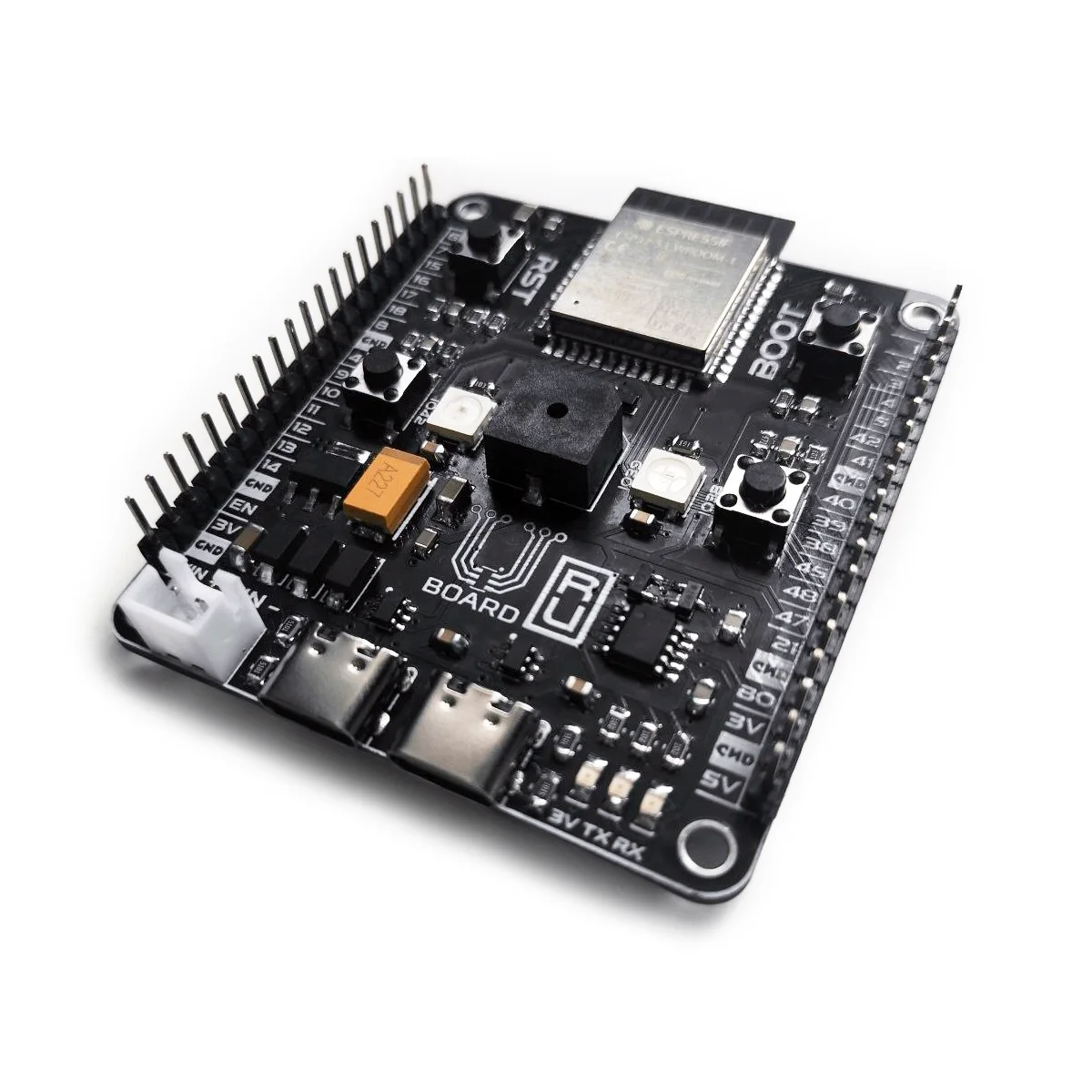
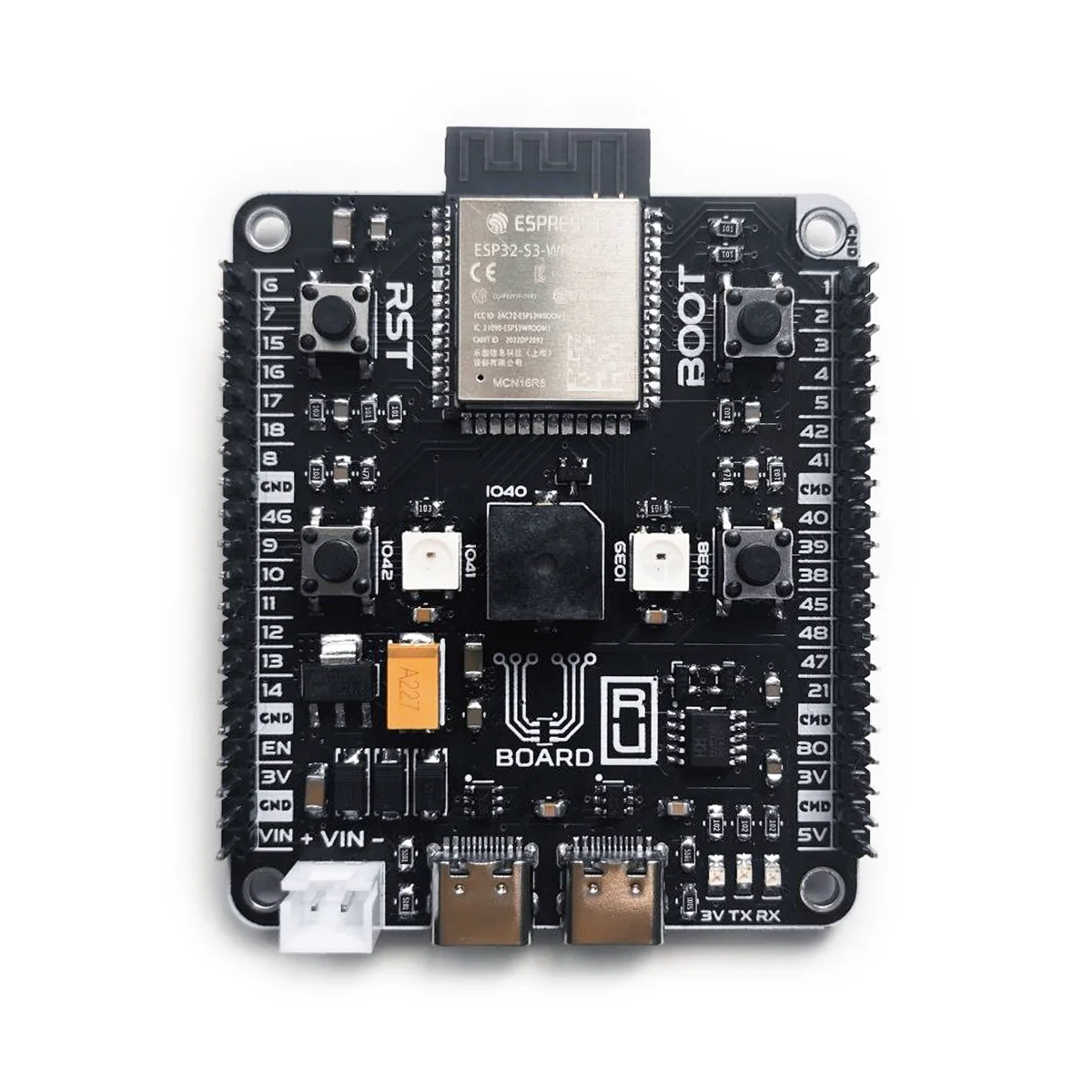
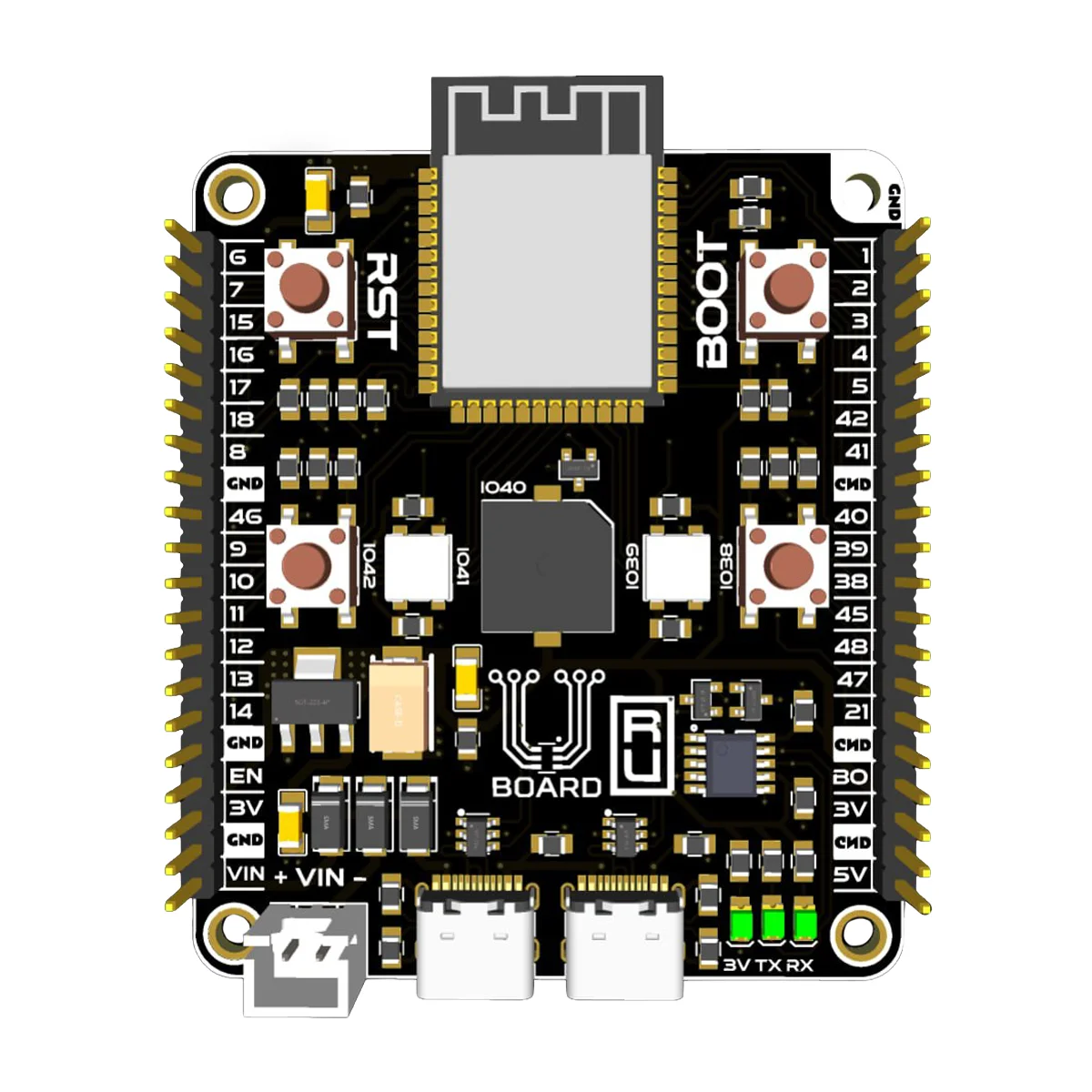
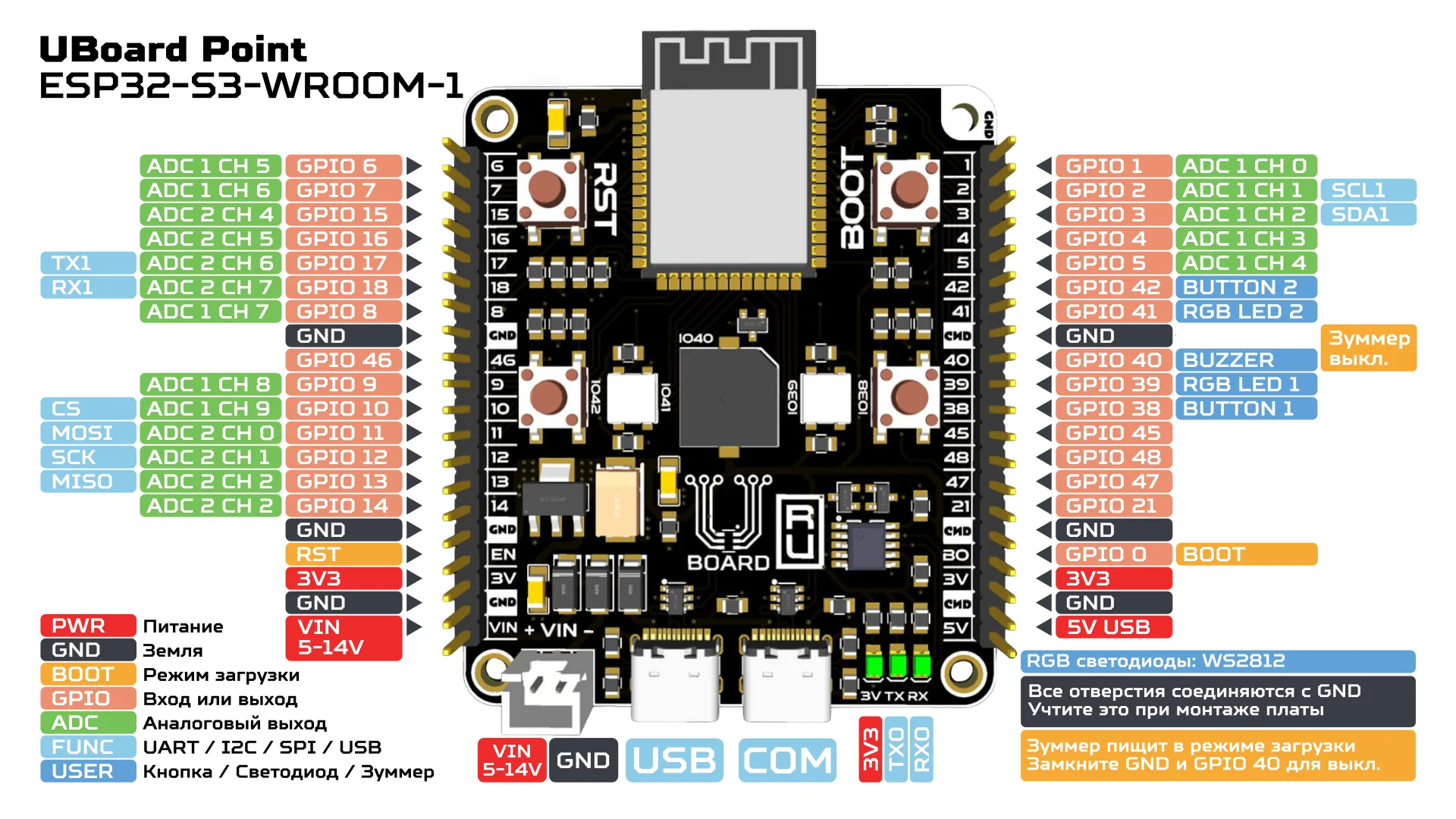
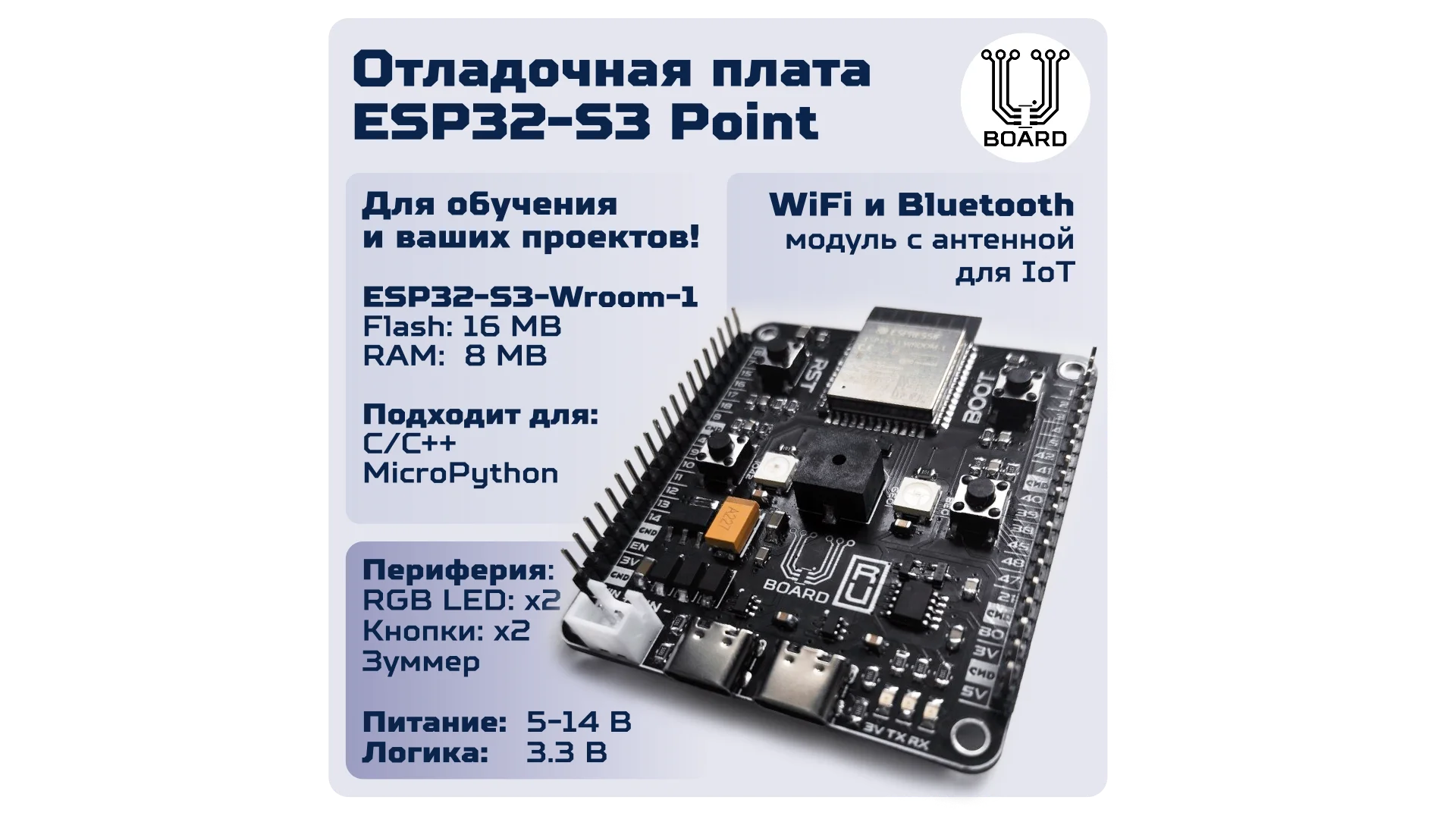
Point is a development board based on the ESP32-S3-Wroom-1. Great for learning and your own projects!
For easier prototyping, the controller has two user buttons, two WS2812 LEDs, and a buzzer wired in. If you don't need this peripheral hardware, there are solder jumpers on the back of the board to disconnect it. See the documentation for the full pinout and board details.
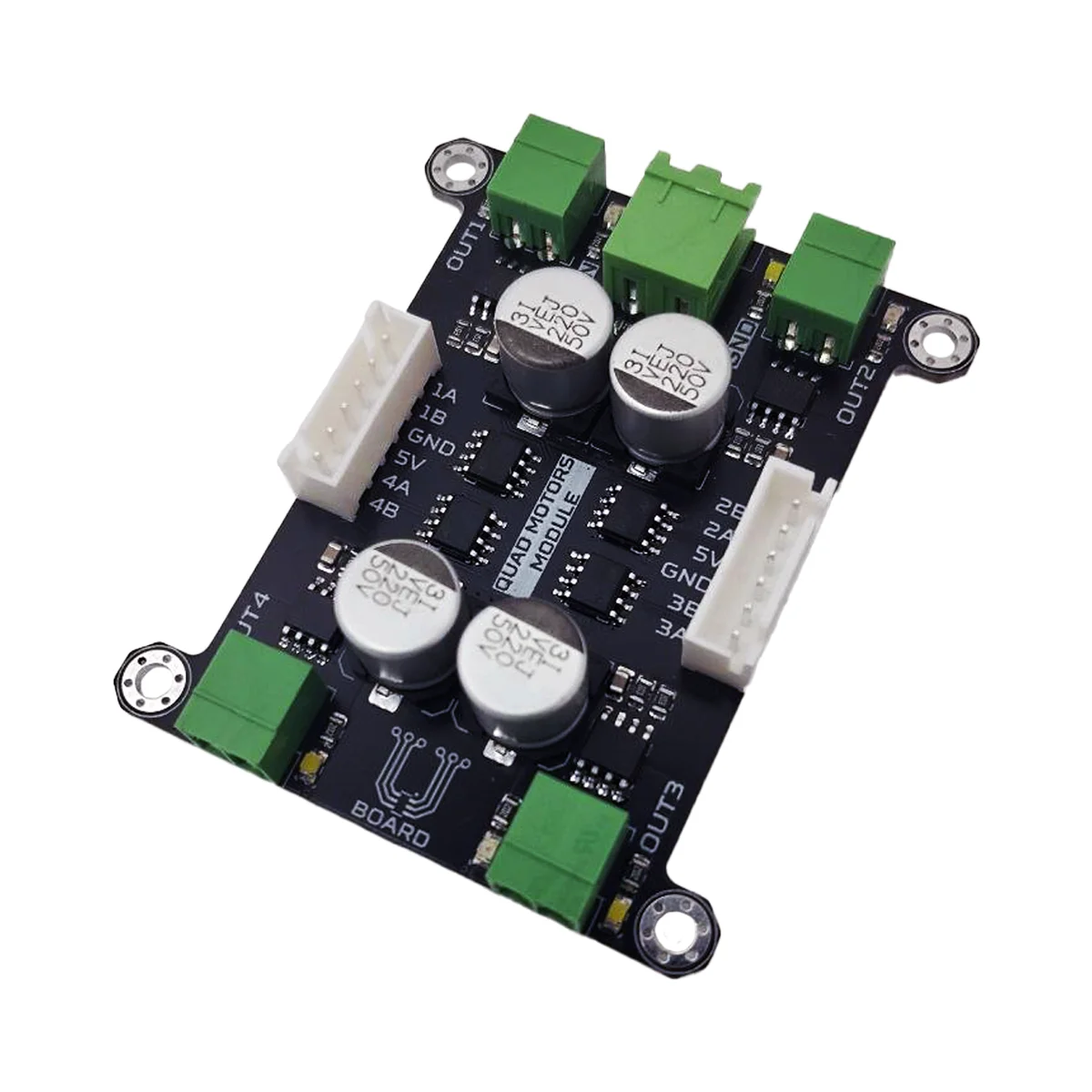
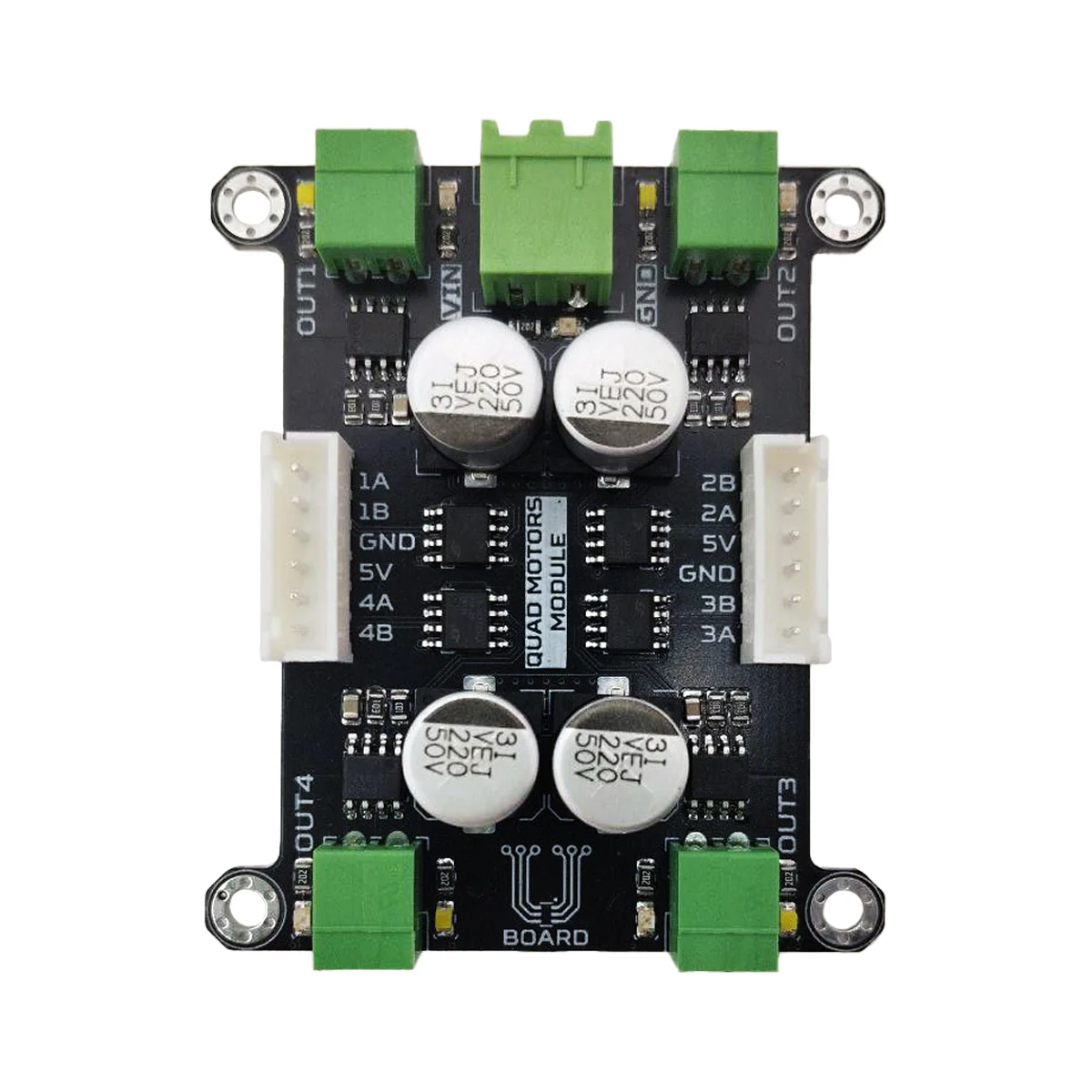
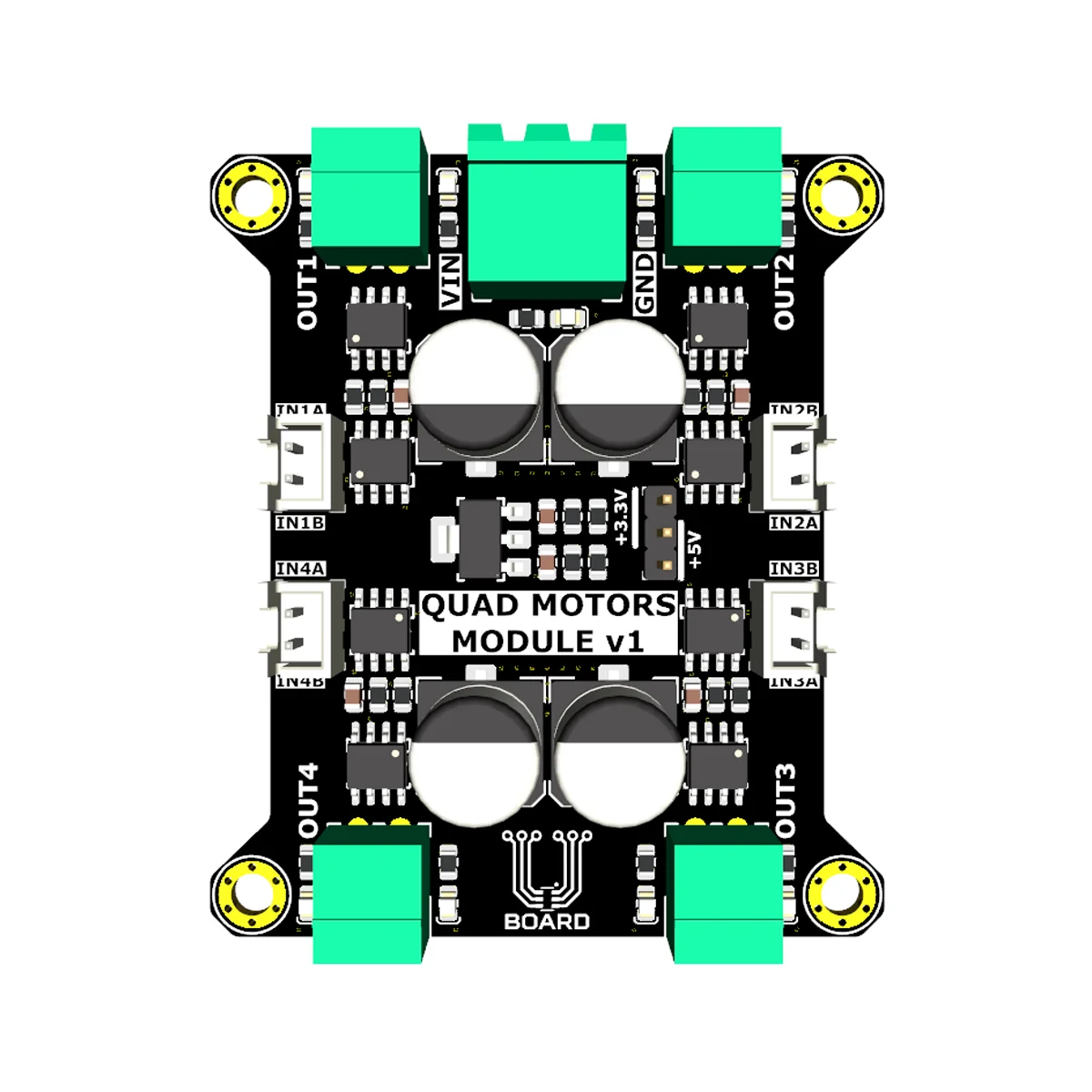
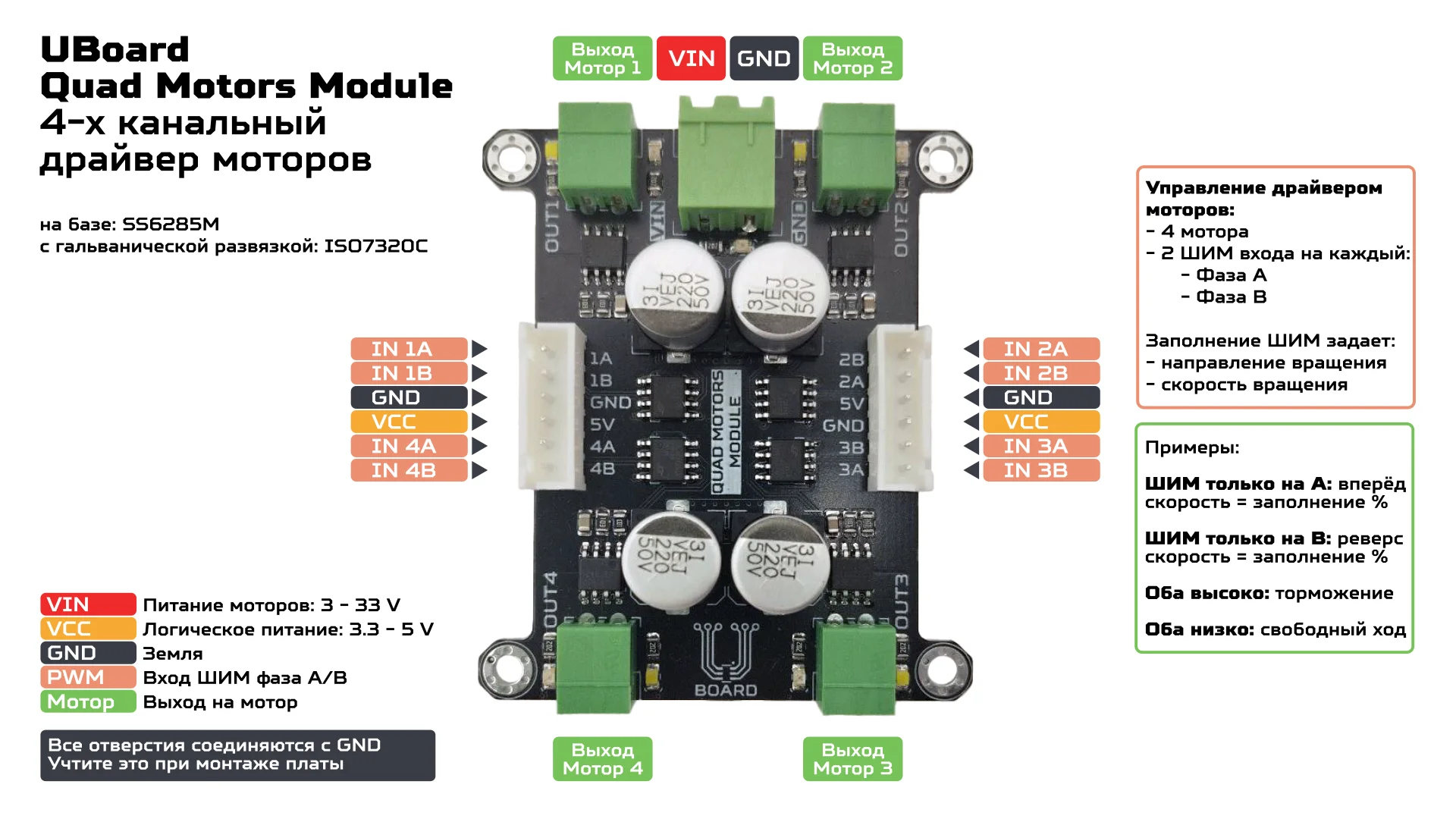
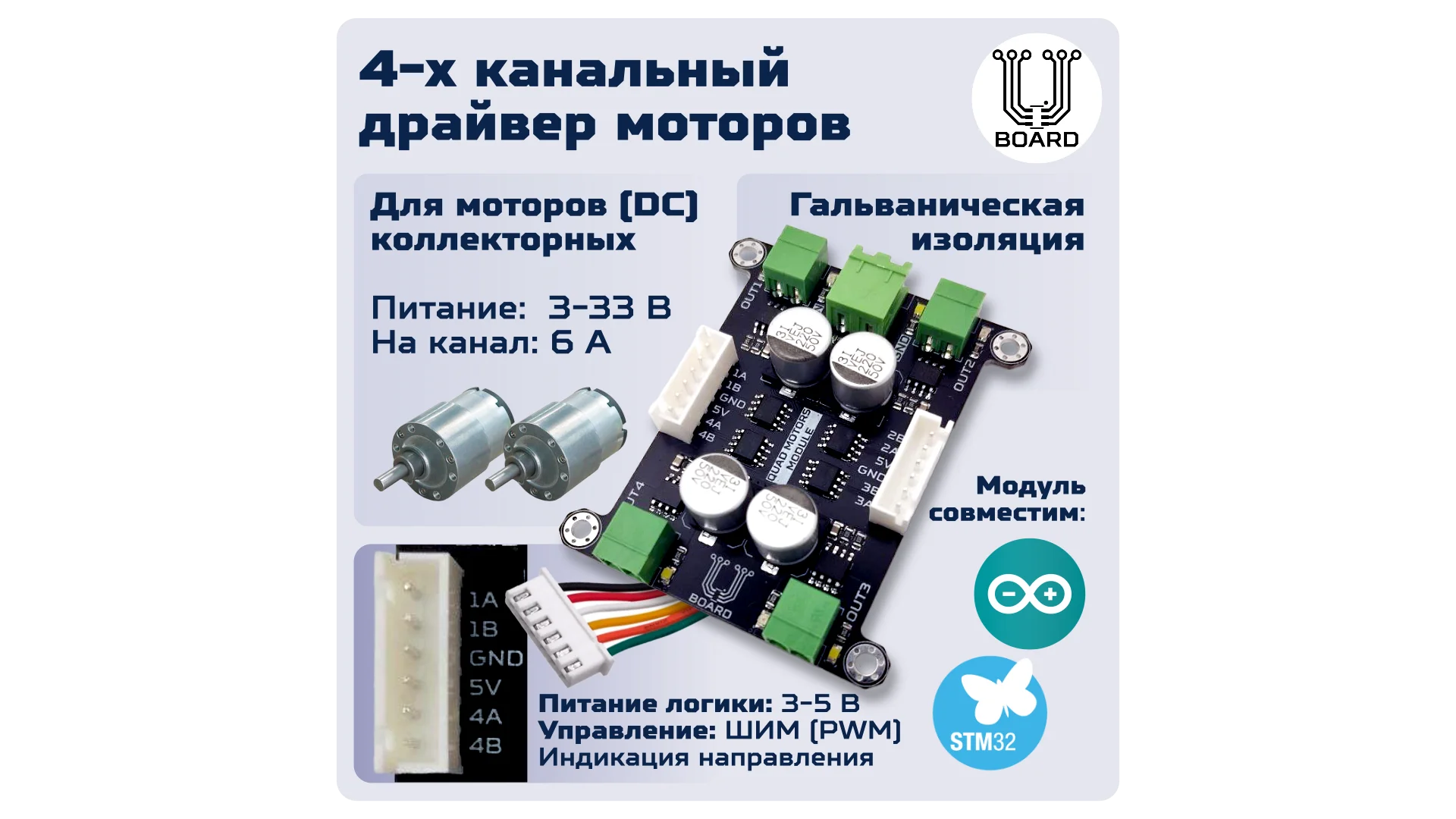
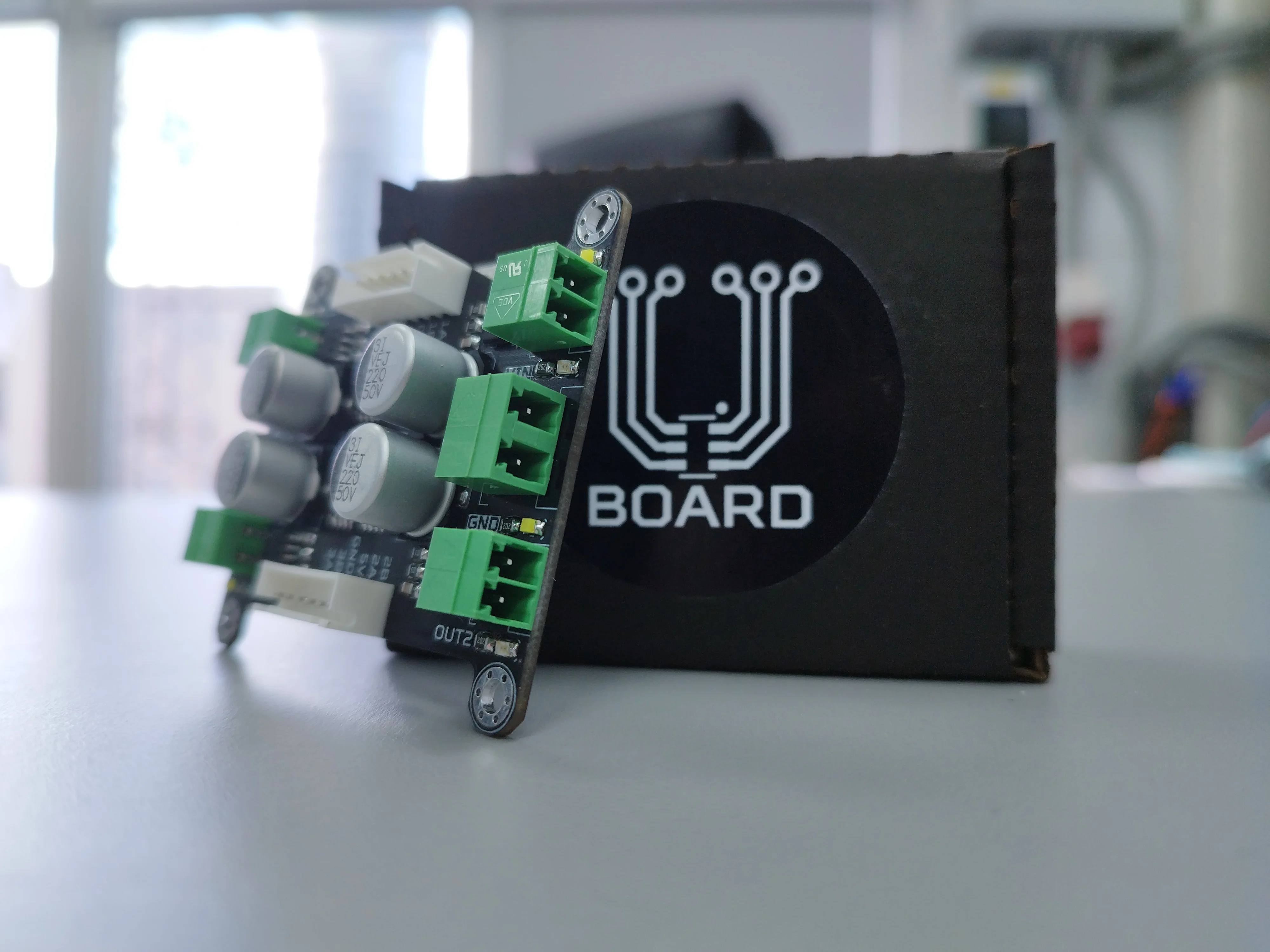
A 4-channel motor driver. Works with brushed DC motors. Protected against common motor-driving issues. Logic lines are galvanically isolated. Perfect for mobile robotics.
The driver is controlled via 2 PWM logic inputs per motor — phase A and phase B. The PWM duty cycle sets the motor's direction and speed. Each output has a direction indicator LED right next to it.
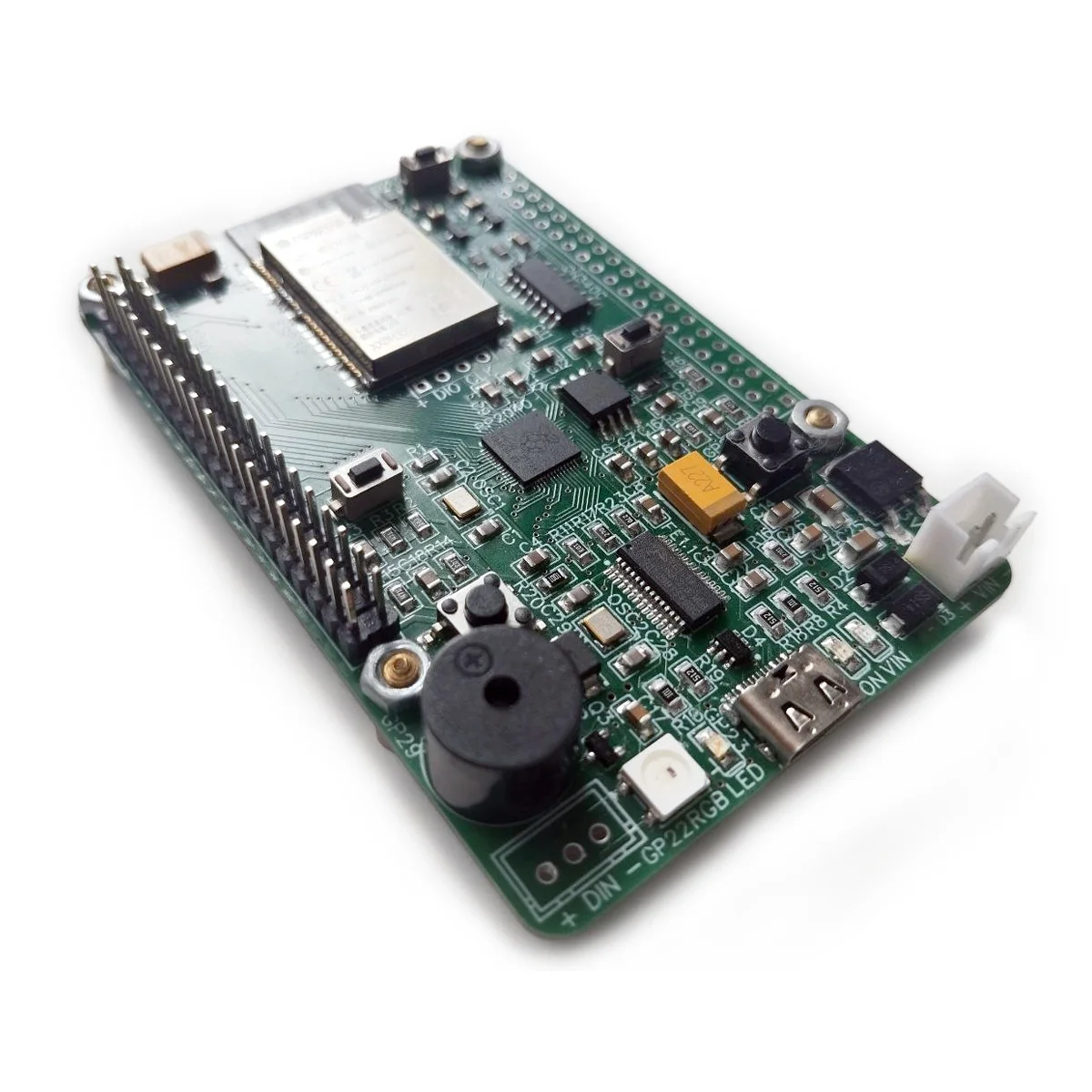
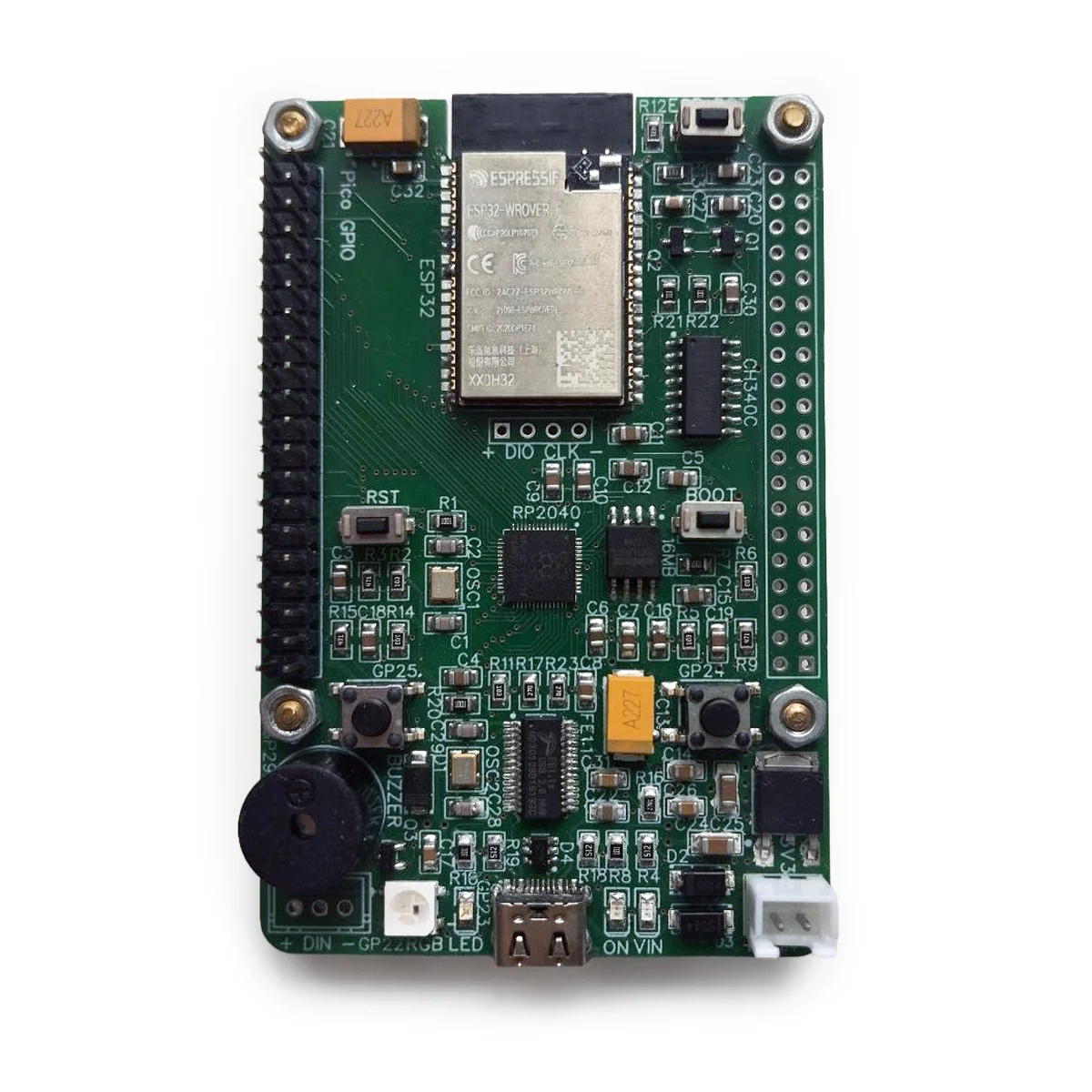
RP2040 + ESP32-S3. Two powerful controllers. One for WiFi and BLE. The other for fast peripheral processing.
Currently in development and testing.


Compact programmer. A handy USB → UART TTL converter. Type-C connector. Based on CH340K.
Currently in development and testing.
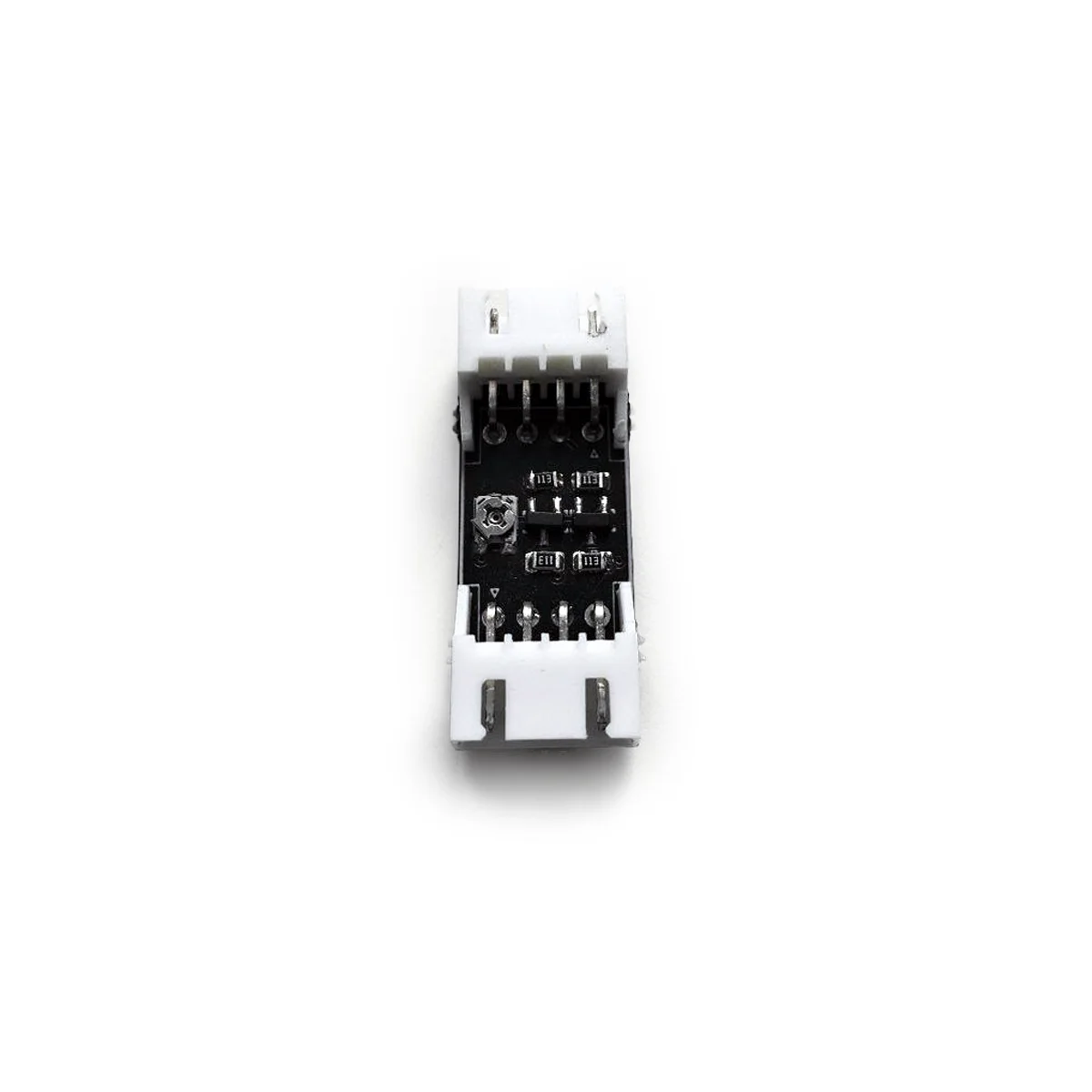
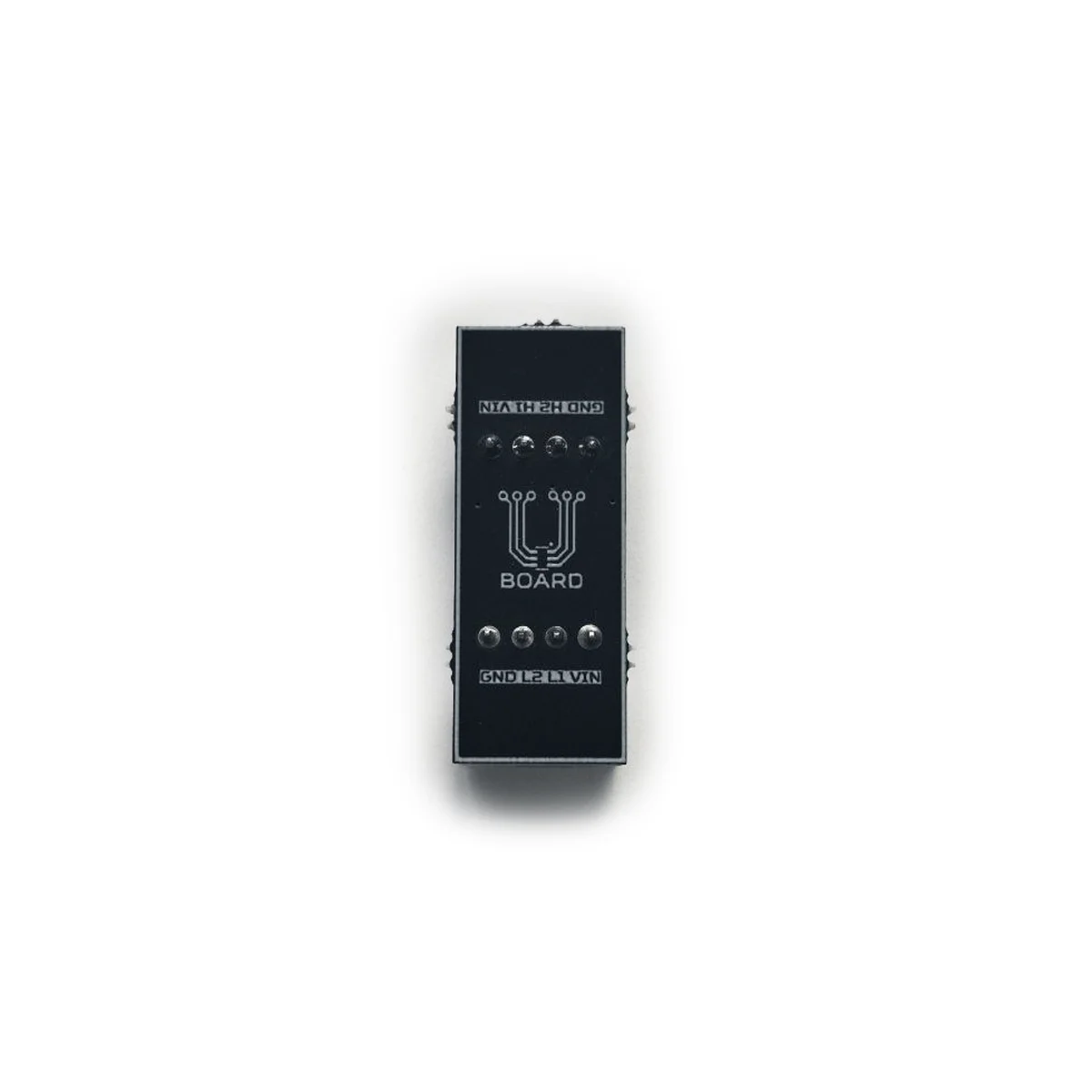
Converts a high logic level to a low one. For example: 3.3 → 5 V. 1 or 2 lines. Through-hole mounting. Convenient for connecting sensors and logic.
Currently in development and testing.